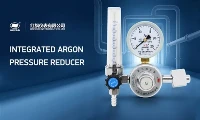
How to install a precision pressure gauge?
The installation position of the precision pressure gauge should meet the requirements of the installation state. The dial should generally be vertical, and the position should be suitable for staff to observe. At the same time, the tightness should be guaranteed.
1. Selection of pressure port position
1.1 Make the sampling pipe and the medium flow perpendicular to each other, and avoid selecting valves, branch pipes, and elbows that are prone to eddy currents;
1.2 When there is a protrusion in the pipeline, the pressure taking port should be taken in front of it;
1.3 When measuring the pressure of liquid and water vapor, the pressure point should be set on the lower side wall of the horizontal pipe, so that there is no gas in the pressure guiding pipe, and the sediment in the pipe will not block the sampling pipe mouth;
1.4 Pressure gauges for measuring liquid and vapour media. It is mounted on the lower part of the dashboard to prevent liquid or condensation from dripping onto other gauges.
2. The laying of the pressure guiding pipe should pay attention to the following points:
2.1 The inner diameter of the pressure guiding tube is usually 6-10mm, and the length is less than 50mm. The measurement error is small, avoiding the delay of the pressure gauge indication caused by the lag of the medium;
2.2 The horizontal section of the connecting pipe should have a certain gradient, and maintain a gradient of 1:10 to 1:20 to facilitate the discharge of condensed water or gas in the pipe.
An isolation valve must be installed on the pressure guiding pipeline for maintenance of the pressure gauge.
3. Determination of installation height
The installation height should be suitable for staff to observe, and should be at the level of sight of ordinary people, that is, 1.5m to 1.6m, and the high pressure should be higher than the head of ordinary people, that is, about 1.7m to 1.8m. When the installation position of the pressure gauge is perpendicular to the pressure measurement point, the liquid column difference should be corrected. The correction value is equal to the pressure value generated by the liquid column in the conduit and the vertical height difference between the instrument and the pressure measuring point. When the instrument is higher than the pressure measurement point, add this correction value; on the contrary, when the instrument is lower than the pressure measurement point, the value should be subtracted.
4. The use of gaskets
In order to ensure the tightness, a suitable gasket should be selected for the seal between the precision pressure gauge joint and the base. When the working temperature and pressure are lower than 80℃ and 2MPa, use leather or rubber gasket; 80℃~45℃, below 5MPa, use asbestos paper or aluminum pad; when the working temperature and pressure are higher, use annealed copper pad or lead pad .
The installation details can help us install the pressure gauge better, and can effectively protect the pressure gauge from damage during the installation process.