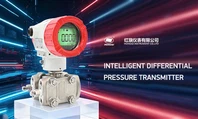
The working principle of a universal pressure transmitter is based on a pressure-sensitive element that converts pressure signals into electrical signals, which are then amplified, processed, and output a standard signal proportional to the measured pressure. The following is an introduction to its specific working principle and application scenarios:
Working principle
Pressure sensing: General pressure transmitters typically use pressure-sensitive elements such as strain gauges, capacitors, and piezoelectric sensors to sense pressure. When pressure is applied to pressure-sensitive components, it will cause physical changes, such as changes in the resistance value of strain gauges, changes in the capacitance value of capacitive components, and the generation of charges in piezoelectric components.
Signal conversion: These physical changes will be converted into electrical signals, such as converting the resistance changes of strain gauges into voltage changes through a Wheatstone bridge, or converting the changes in capacitance and charge into corresponding electrical signals.
Amplification and processing: The converted electrical signal is usually weak and needs to be amplified by an amplifier. At the same time, some signal processing is performed, such as filtering to remove noise and linearization to ensure a good linear relationship between the output signal and pressure.
Signal output: After processing, the electrical signal will be output in a certain standard format, such as 4-20mA current signal, 0-10V voltage signal, or digital signal, in order to connect and communicate with other devices (such as controllers, recorders, PLCs, etc.), achieve pressure measurement, monitoring, and control.
Application scenarios
Industrial automation: In the fields of chemical, petroleum, metallurgy, power and other industries, it is used to measure the pressure of fluids in pipelines, the pressure in reaction vessels, the pressure in hydraulic systems, etc., to achieve automated control and monitoring of the production process, ensuring the safety and stability of the production process.
HVAC system: used to measure the pressure of chilled water and cooling water in the air conditioning system, as well as the air pressure inside the ducts, to regulate the operating status of the air conditioning system, ensure indoor comfort and energy efficiency of the air conditioning system.
Water treatment industry: In water treatment plants, it is used to measure the outlet pressure of water pumps, water level pressure of water towers, pressure difference of filtration systems, etc., to monitor the water treatment process, ensure water quality and supply safety.
Aerospace: Used to measure the fuel pressure, hydraulic system pressure, air pressure, etc. of aircraft engines, providing important pressure data monitoring for the safe flight of aircraft.
Automotive manufacturing: used in various stages such as engine testing, brake system testing, and fuel system testing to measure various pressure parameters to ensure the performance and safety of automotive components.